Our panel members come from a range of different backgrounds and walks of life. Their lives and experiences differ and so they can offer us a variety of different perspectives. That’s really important as it ensures our research is of the best quality, has real impact and reflects the views of the wider organ donation and transplantation community.
Read on to hear directly from some of our panel members about their motivations for joining us and their experiences so far.
Andrea
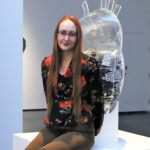
I am a heart transplant recipient, artist and activist. I found out about the BTRU panel through Charlotte’s social media posts and then reaching out to Hannah directly.
My longstanding patient advocacy covers the areas of both heart and all organ transplant provision, plus indoor air quality issues, patient safety, and post-viral conditions. Having had my transplant at Great Ormond Street Hospital in 2002 and then being followed by Papworth Hospital for transplant continuing care as an adult, with detours of both highs and lows and secondary conditions being collected along the way, I have almost 25 years of experience of being a transplant patient across multiple hospitals.
I bring creative problem solving from the arts, along with an academic background in the medical humanities, and since 2019 I have been part of an international collective of organ transplant recipient artists, Creative Hybrids Lab, meaning that I contextualise transplant care in the UK in contrast to the care my transplant pals abroad receive. The image is of me is with my pill packaging sculpture ‘Infinite Remainders’ from a group exhibition in Sydney in 2023.
I am passionate about creating improvements in transplant services that I have unfortunately all too often seen stagnate and decline over the decades due to increasing funding and policy gaps in the system. I believe that vast reform through renewed investment, with quality focussed research to evidence this need, is vital to make transplant services be of a gold standard that effectively meets all the basic needs of patients, supporters and staff.
Between my activism pushing for better DHSC funding, my patient advocacy as an NHS England Transplant Patient and Public Voice (PPV) partner in the Specialised Commissioning for heart and lung transplant services, and now the role on this NIHR BTRU research panel, I see how, if enough of us transplant participants can identify the biggest issues together, and push for tweaks to services to be able to apply this research, positive change is both possible and inevitable.
I’ve found the BTRU panel very welcoming and accessible in supporting my joining and participating in sharing my feedback and would strongly encourage all those who are part of under-represented groups and minorities amongst transplant participants to get involved; your insights are both valuable and essential.
Photo: Courtesy of Damon AMB of Document Photography.
Charlotte
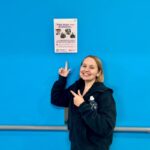
I’m passionate about using my experience to contribute to research and improve outcomes for others affected by transplantation and liver disease. Being part of the panel gives me the opportunity to ensure that patient voices are represented, to influence meaningful change, and to support the development of more compassionate and effective care.
My personal experience has been a key driver of this involvement. I underwent a split liver transplant in February 2025 after living with primary sclerosing cholangitis (PSC) since the age of 10. This journey gave me a deep understanding of the physical and emotional challenges patients face, and it continues to shape my commitment to supporting others and contributing to research.
Alongside this, I bring a professional background in Human Resources within the NHS, as well as my work as a qualified lifestyle and executive coach. I support patients and clients with a strong focus on wellbeing and mindset, which complements my advocacy work.
Since my transplant, I have dedicated my time to patient advocacy, particularly raising awareness of organ donation and improving patient experience. I enjoy working collaboratively – whether that’s contributing to discussions, supporting research initiatives or helping to shape patient-focused resources – and I value the opportunity to make a meaningful impact as part of the panel.
Irene
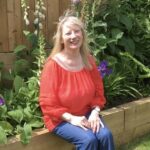
I’ve been a member of the panel for several years. A relation of mine was a donor, and a general interest in health and research led me to join the group to find out more. I especially wanted to find out if a health condition would mean that I could still be a donor.
I enjoy listening to the researchers talk about their projects and have learned a lot from their presentations. Some panel members have personal experiences and it’s been insightful to hear their perspectives. The panel aims to be as diverse as possible, and we have members from across the country. We regularly meet virtually and our PPIE Lead, Hannah, endeavours to organise in-person events for us to meet the team for presentations and social events.
We occasionally have tasks that we can contribute to, for example, looking at documents or the website, to make sure that things are as understandable as possible. I like to have some knowledge of research but then ‘bring myself’ to the project. We are encouraged to give feedback – we’re always told that our questions and opinions are important. I also feel that it’s important to be respectful of the views of others and to have an interest in research.
In the photo, I’m wearing ‘Red for Research’.
John
I was invited by Newcastle University to join the BTRU Patient and Public Research Panel in 2016 after being interviewed by a medical student as part of their studies. My wife had received a heart transplant the previous year and I felt that not only was I interested to find out about research but also that it was a way of giving something back.
By being a member you are finding out about the research work that is being carried out and giving your opinion as an ordinary member of the public as to how you perceive the relevance of the work being proposed. Those of us whose lives are directly or, in my case, indirectly affected by the limitations of life with a transplant can impart our experiences to the researchers. But you don’t need to have any personal experience, just your own thoughts are enough – it all goes into the mix. I’ve had no formal training just guidelines on how to conduct yourself at meetings.
Our views are important to the researchers, they do take notice and sometimes have made significant changes based on what we’ve said.
For me being part of the panel has been very rewarding. And to anyone thinking of joining us I would say that it doesn’t matter who you are, where you come from, what religion or none you may follow. Come with an open mind and say what you think and ask questions. Your views are important.
Our public co-applicant
Our public co-applicant joined us as a panel member in the first BTRU in ODT. She then played a crucial role in the current unit by becoming our public co-applicant. She was involved in writing the grant application, particularly in developing the plain English summary. This is what she has to say about her experience of being involved.
I originally heard about the panel from one of the existing members. Transplant surgeons undertook a massive operation on a family member with cancer. Joining the panel was a way of giving back and saying thank you for their amazing work.
I find it fascinating and inspiring to hear about the research. It’s also very interesting to hear the views of other panel members at the meetings. They come up with questions and ideas that I never would have thought of. I enjoy being involved in other activities too. These include:
- going to annual meetings with the whole research team
- participating in sessions for students and researchers
- attending online talks
- being involved in engagement activities where we meet members of the public
To help me with my role, I have attended online training sessions on relevant topics, e.g. writing in plain English.
I think the most important qualities a panel member needs are:
- an interest in learning new things
- being prepared to listen to different views on a topic
- being happy to share any thoughts you have on the research
I would advise anyone interested in joining the panel to contact Hannah to discuss what’s involved. Hannah can also arrange for people to talk to other panel members and for them to attend a meeting as a guest.

